
EU/U.S. Biometric Travel Agreement
Are you traveling to the EU? Soon, your travel details and biometrics could be sent straight to the United States.

Last December, the Council of the European Union approved a plan to start negotiations with the United States on a new Enhanced Border Security Partnership. The goal of the partnership is to create a common framework for exchanging travel data—including facial images, fingerprints, and other biometric identifiers—between EU member states and U.S. authorities.
Watch on Substack / Odysee / Rumble
The decision was made without any public debate.
Once the framework is finalized, each member state can opt‑in.
It seems Danish politicans aren’t as angry as they let on over the U.S. attempting to annex Greenland.

Denmark also announced it will not take part in its own recommendation.
Way to throw the entire EU under the bus, Danish politicians!
Ireland, which is outside the Schengen area, will also sit out the partnership.
The European Commission has already adopted the decision and set up a dedicated committee to negotiate the data‑sharing terms. The timing is significant: both sides are simultaneously rolling out more extensive biometric entry‑exit systems. The EU already uses such systems at many borders, and the United States is accelerating its own deployment.
A concrete illustration of the U.S. side comes from the Customs and Border Protection (CBP) agency, which is seeking approval for its ESTA Mobile app—a visa‑free program that other countries could later adopt.
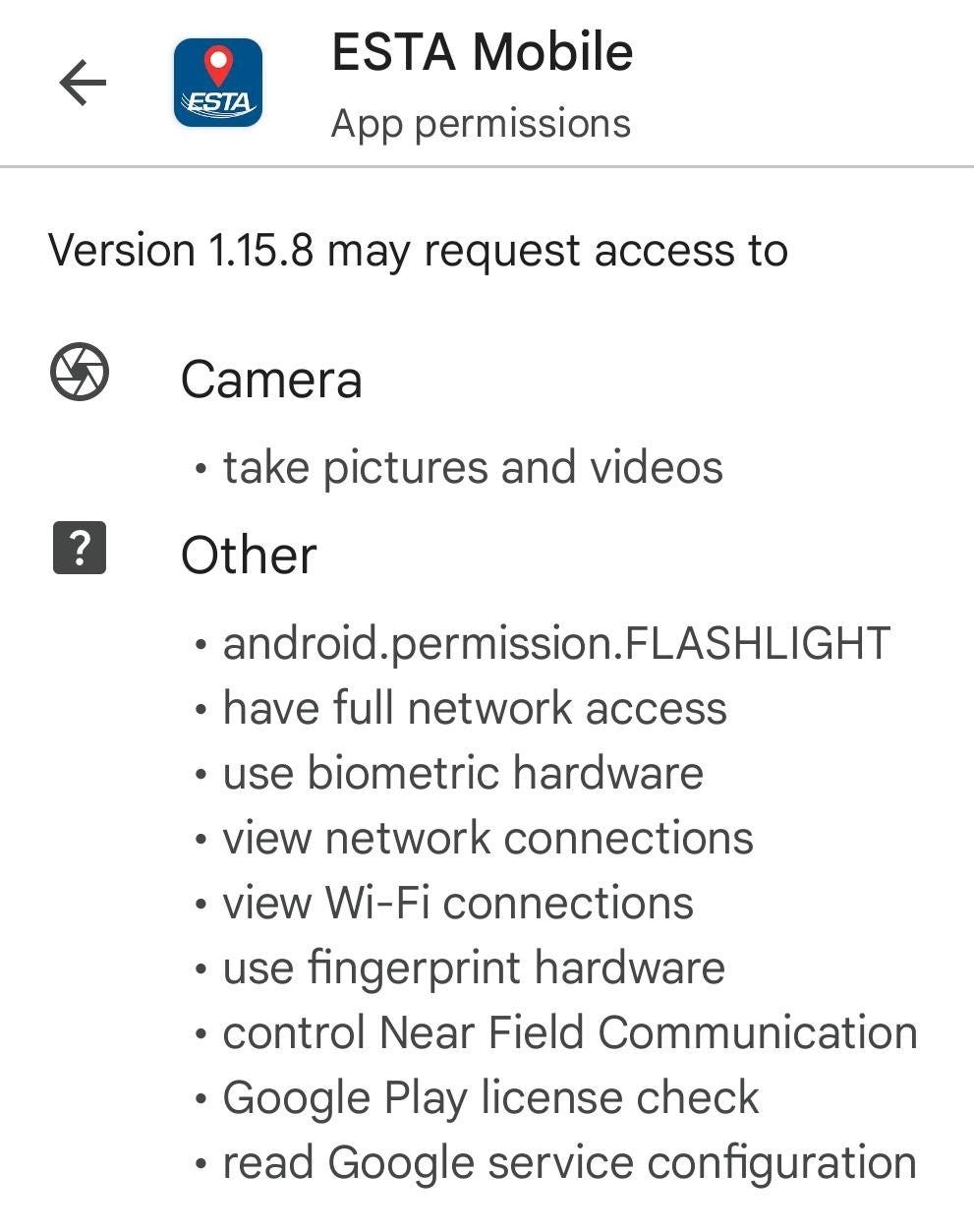
The app would not only capture a traveler’s face and fingerprint but also request a massive amount of personal information, such as:
- Telephone numbers used in the last five years
- Email addresses from the past ten years
- IP addresses attached to uploaded photos
- Names, phone numbers, and dates of birth of family members
- Residential histories for both the traveler and their relatives
- Business telephone numbers and email accounts
- Full biometric data (fingerprints, facial scans, etc.)
In total, CBP estimates that it will take roughly 22 minutes for each traveler to fill out the questionnaire.
What’s next—DNA? (Don’t get any ideas.)
If you are a foreign national planning a trip to the United States, you may want to book your visit before these new requirements are enforced.
This is a segment from #TBOT Show Episode 20. Watch the full episode here.
🚨 Traveling internationally?
Don’t let your phone become the next data trap.
For most people, a phone feels like a requirement or something you can’t live without, even though you know it’s tracking everything you do.
Above Phone flips that dynamic. It’s a device designed to respect you, protect your privacy, and give you the freedom big tech takes away.
You get:
- private app stores
- secure messaging
- offline navigation
- a safer browser
- open-source tools with no trackers, no ads, and no hidden connections
Above Phone doesn’t control you.
It empowers you.
✊ This is what digital freedom feels like.

Take Back Our Tech Newsletter
Join the newsletter to receive the latest updates in your inbox.